What Makes a Top Digital Marketing Company Stand Out in 2026
Reading time: 9 minutes
Ever hired an agency that promised “explosive growth” and delivered a spreadsheet full of vanity metrics instead? You’re not alone. In 2026, the digital marketing landscape is crowded with agencies claiming AI-powered everything, yet only a fraction actually move revenue needles. Let’s cut through the noise and figure out what separates the agencies worth your budget from the ones burning it.
Table of Contents
- Why the Bar Has Risen in 2026
- The Five Traits of Elite Agencies
- Case Studies: Proof Over Promises
- Red Flags vs. Green Flags Comparison
- Common Challenges and How to Overcome Them
- FAQs
- Your Roadmap Forward
Why the Bar Has Risen in 2026
Digital marketing isn’t what it was even two years ago. With Google’s AI Overviews reshaping search visibility and platforms like TikTok and Meta leaning harder into AI-generated ad creative, the margin for mediocrity has vanished. According to a 2026 Gartner CMO survey, marketing budgets now average 9.3% of company revenue, yet 62% of CMOs say they still struggle to prove ROI from their agency partnerships.
Here’s the straight talk: clients aren’t paying for effort anymore—they’re paying for outcomes that are measurable, attributable, and repeatable. A top digital marketing company in 2026 doesn’t just “run campaigns.” It builds systems that compound results over time.
The Shift From Channels to Ecosystems
Five years ago, agencies specialized in SEO, or PPC, or social. Today’s standouts think in ecosystems—how organic search, paid media, email, influencer partnerships, and AI chat visibility all feed each other. A well-optimized blog post might now influence how ChatGPT or Perplexity cites your brand, which in turn drives branded search, which lowers your paid acquisition costs. Agencies that still operate in silos are quietly losing clients.
The Rise of AI-Literate Strategists (Not Just AI Tools)
Nearly every agency claims “AI-powered” services now. The differentiator isn’t the tool—it’s whether the strategist behind it understands when to trust the AI and when to override it. Top agencies use AI for speed (data analysis, first-draft creative, audience modeling) but rely on human judgment for brand voice, cultural nuance, and long-term positioning.
The Five Traits of Elite Agencies
1. Transparent, Attribution-Based Reporting
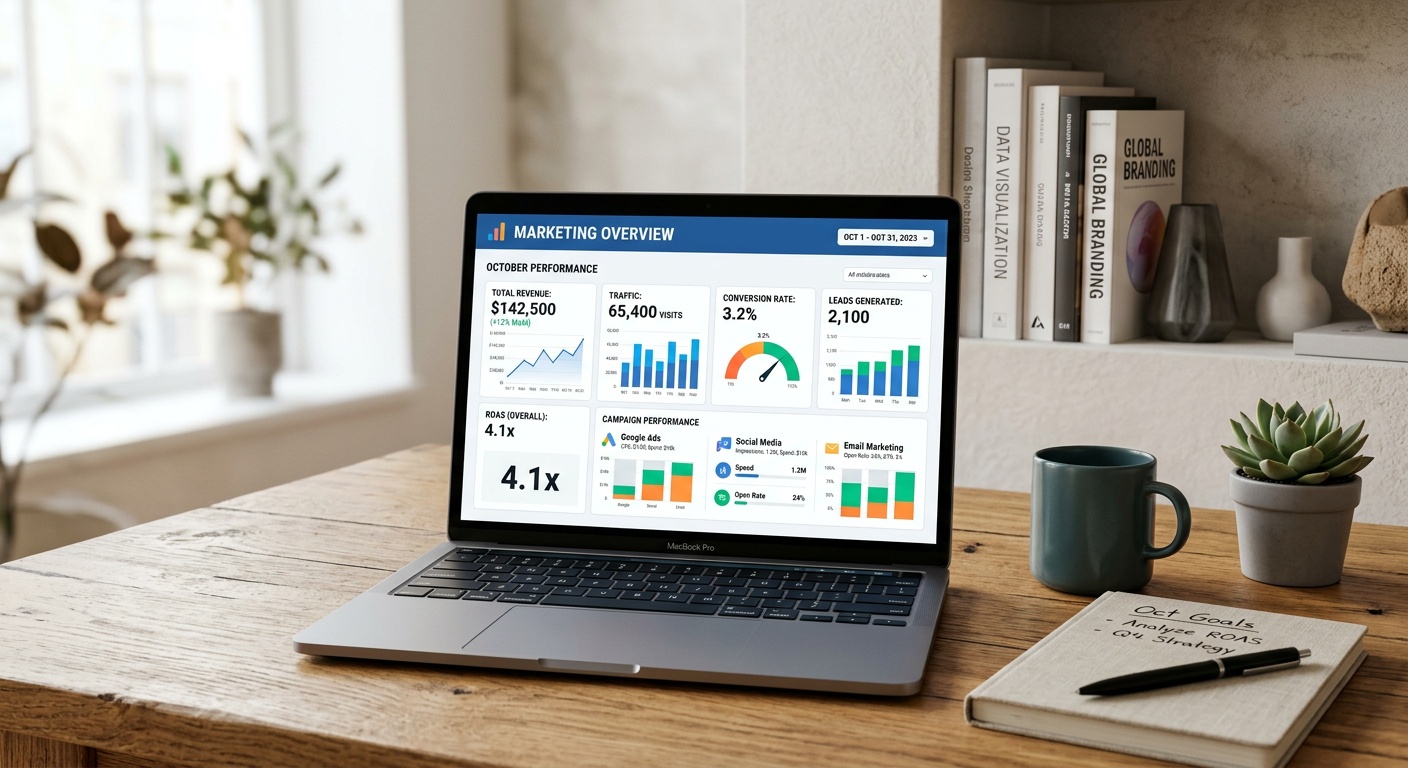
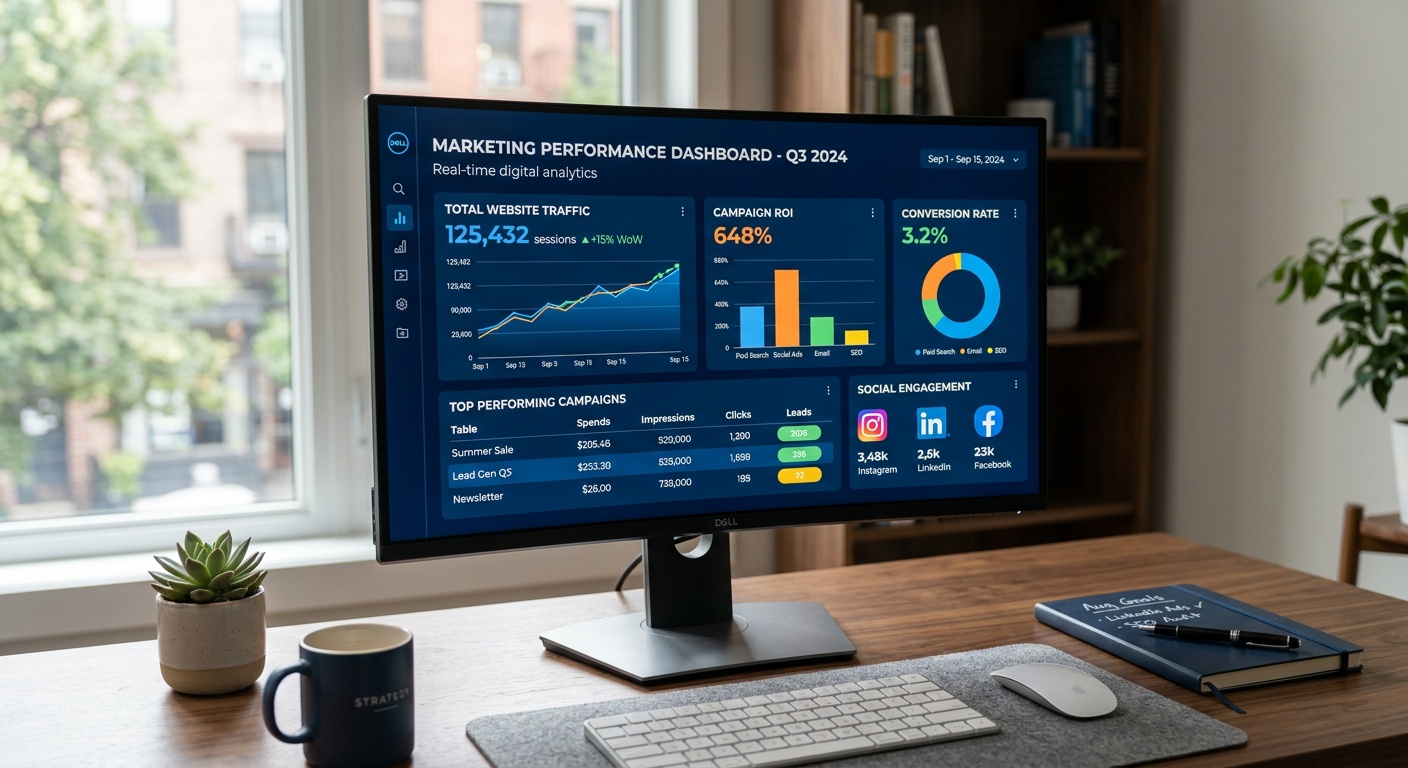
If your agency’s monthly report is a wall of impressions and reach numbers with no connection to revenue, that’s a warning sign. Elite agencies build custom dashboards tied to actual business metrics—cost per qualified lead, customer lifetime value, and marketing-influenced pipeline. Pro tip: ask any prospective agency to show you a live client dashboard (anonymized) during the pitch. Their willingness—or reluctance—tells you everything.
2. Deep Industry-Specific Playbooks
Generalist agencies can execute tactics, but specialists understand context. A SaaS company and a regional healthcare provider have wildly different buying cycles, compliance concerns, and content expectations. Top agencies maintain playbooks—not templates—built from pattern recognition across dozens of similar clients.
3. Creative That’s Rooted in Data, Not Guesswork
Great creative used to be about winning awards. Now it’s about winning attention in a feed where users scroll at roughly 1.7 seconds per post. Standout agencies A/B test hooks, thumbnails, and headlines relentlessly, treating creative as a testable hypothesis rather than an artistic statement.
4. Agility Without Chaos
Algorithm updates, privacy regulation changes, and platform pivots happen constantly. When Google rolled out its expanded AI Mode in search results earlier in 2026, agencies with strong technical SEO foundations adapted content structure within weeks—others saw client traffic drop 20-30% and scrambled for months.
5. Genuine Partnership Mentality
This sounds soft, but it’s measurable. Does the agency proactively flag underperformance, or wait for you to notice? Do they push back on unrealistic client requests when data suggests a different path? That kind of intellectual honesty is rare—and it’s the clearest signal of a long-term partner versus a vendor.
Case Studies: Proof Over Promises
Case 1 — Mid-Market E-commerce Brand: A home goods retailer partnered with a boutique agency in early 2025 struggling with rising CPCs on Meta ads. Instead of just optimizing existing campaigns, the agency restructured the entire funnel—shifting 40% of budget to organic UGC-style content paired with retargeting. Within nine months, blended customer acquisition cost dropped 34%, and by 2026 the brand’s email list (built through content, not ads) was generating 22% of total revenue.
Case 2 — B2B SaaS Company: A project management software company hired a top-tier agency specifically for its “AI search visibility” service—optimizing content so it would be cited by AI assistants like Perplexity and ChatGPT’s browsing feature. Within six months, branded search queries rose 41%, and demo requests attributed to AI-referral traffic increased from near-zero to 12% of total inbound leads.
Case 3 — Local Service Business: A regional HVAC company worked with a smaller agency focused purely on local SEO and Google Business Profile optimization. Rather than chasing national rankings, the agency doubled down on hyper-local content and review generation. Local pack visibility jumped from page two to the top three results in their metro area, driving a 58% increase in phone call conversions year-over-year.
Red Flags vs. Green Flags: A Quick Comparison
| Metric | Red Flag Agency | Green Flag Agency |
|---|---|---|
| Reporting Frequency | Quarterly, vague summaries | Monthly, tied to revenue KPIs |
| Contract Length | 12-month lock-in, no exit clause | Month-to-month after initial ramp-up |
| Client Turnover Rate | High (over 40% annually) | Low (under 15% annually) |
| Strategy Customization | Same template for every client | Custom playbook per industry/client |
| AI Usage | 100% AI-generated, unreviewed content | AI-assisted, human-refined and fact-checked |
Client Satisfaction by Agency Focus Area (2026 Survey Data)
Common Challenges and How to Overcome Them
Challenge 1: Misaligned Expectations From Day One
Many client-agency relationships break down not from poor execution but from unclear goals. The fix? Insist on a documented 90-day plan with specific, numeric milestones before signing anything. If an agency resists putting numbers on paper, that’s telling.
Challenge 2: Data Silos Between Marketing and Sales
Even excellent campaigns fail to prove value when CRM and marketing platforms don’t talk to each other. Top agencies now include marketing operations specialists who integrate HubSpot, Salesforce, or similar systems directly into reporting, closing the loop between lead and closed revenue.
Challenge 3: Over-Reliance on a Single Channel
Brands that put 90% of budget into one platform (say, Meta ads) got burned hard when iOS privacy changes and rising CPMs hit in prior years. Diversification across owned, earned, and paid channels isn’t just a buzzword—it’s insurance against platform volatility.
Frequently Asked Questions
How much should a small business budget for a digital marketing agency in 2026?
Most small-to-mid-sized businesses should expect to invest between $2,500 and $10,000 per month for genuinely strategic (not just execution-level) support. Anything significantly lower usually means templated service with minimal customization.
How long before I see real results from a new agency partnership?
Expect a 60-90 day ramp-up period for research, strategy, and initial testing. Meaningful, sustained results—especially in SEO—typically show between month four and month nine. Agencies promising overnight transformations should be scrutinized closely.
Is it better to hire a specialized agency or a full-service one?
It depends on your maturity stage. Early-stage brands often benefit from full-service agencies that can build foundational infrastructure across channels. Established brands with existing systems often get more value from specialists who can go deep in one high-leverage area, like technical SEO or paid social.
Your Roadmap Forward
Choosing a digital marketing partner in 2026 isn’t about finding the flashiest pitch deck—it’s about finding a team that treats your growth like their own reputation is on the line. Here’s how to move forward with confidence:
- Audit before you hire: Request a free or low-cost audit of your current digital presence to see how the agency thinks before you commit.
- Demand attribution clarity: Any agency unwilling to connect marketing activity to revenue outcomes isn’t ready for 2026’s standards.
- Test their agility: Ask how they’ve responded to a recent major platform or algorithm change—specifics matter more than generalities.
- Start with a pilot project: Rather than a 12-month contract, negotiate a 90-day pilot with clear KPIs to reduce risk on both sides.
- Reassess quarterly: Even great partnerships need recalibration as your business and the platforms evolve.
The agencies that will define the next era of digital marketing are the ones blending AI efficiency with irreplaceable human judgment—and as search engines, social platforms, and consumer behavior continue shifting, that balance will only become more valuable. So, before your next renewal or RFP, ask yourself honestly: is your current partner building your future, or just maintaining your present?